The Sanctum Journal · Essay 01
Water and Stillness
On pool architecture, and the element at the centre of every Sanctum environment.
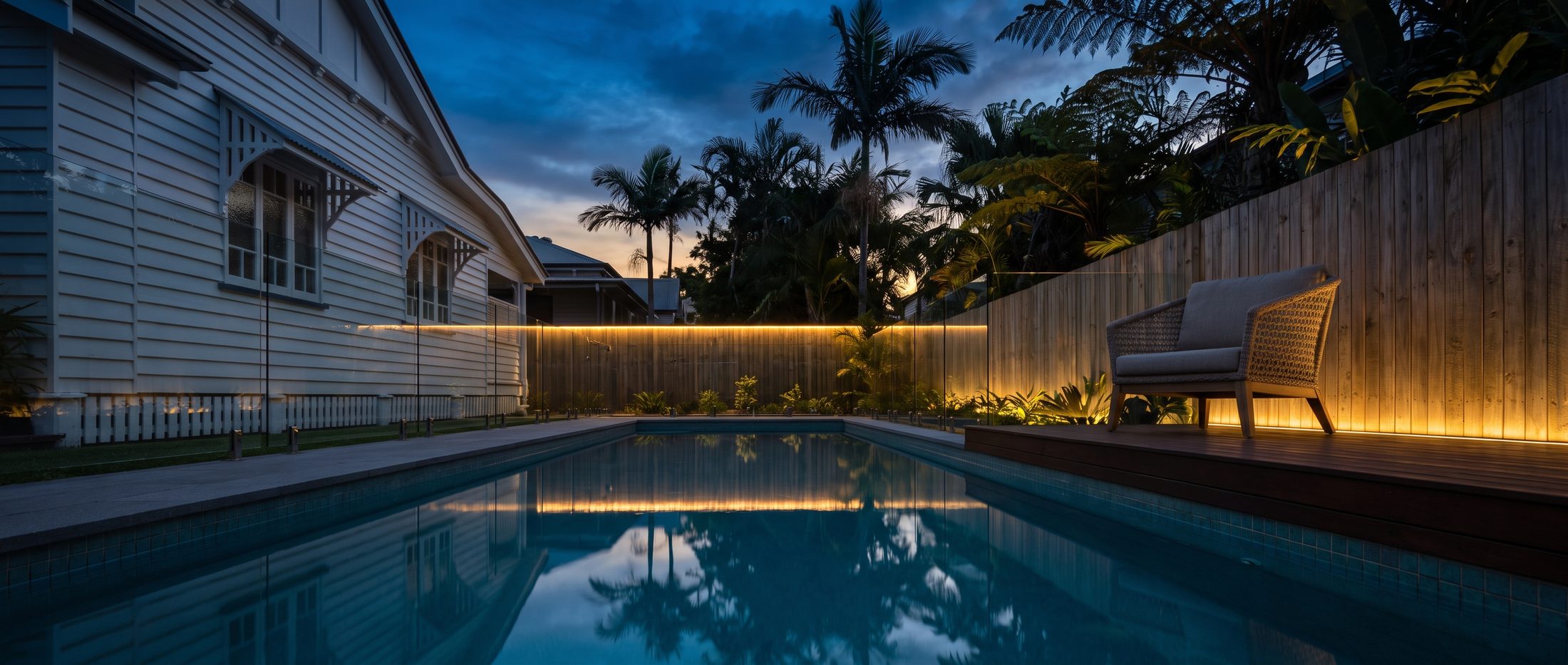
Every material we work with moves. Timber silvers, stone weathers, planting grows into the shape the light asks of it. Water is the exception — it does not age, it only responds. Disturb it and it records the disturbance; leave it and it returns, patiently, to stillness. That patience is the quality every Sanctum environment is built around.
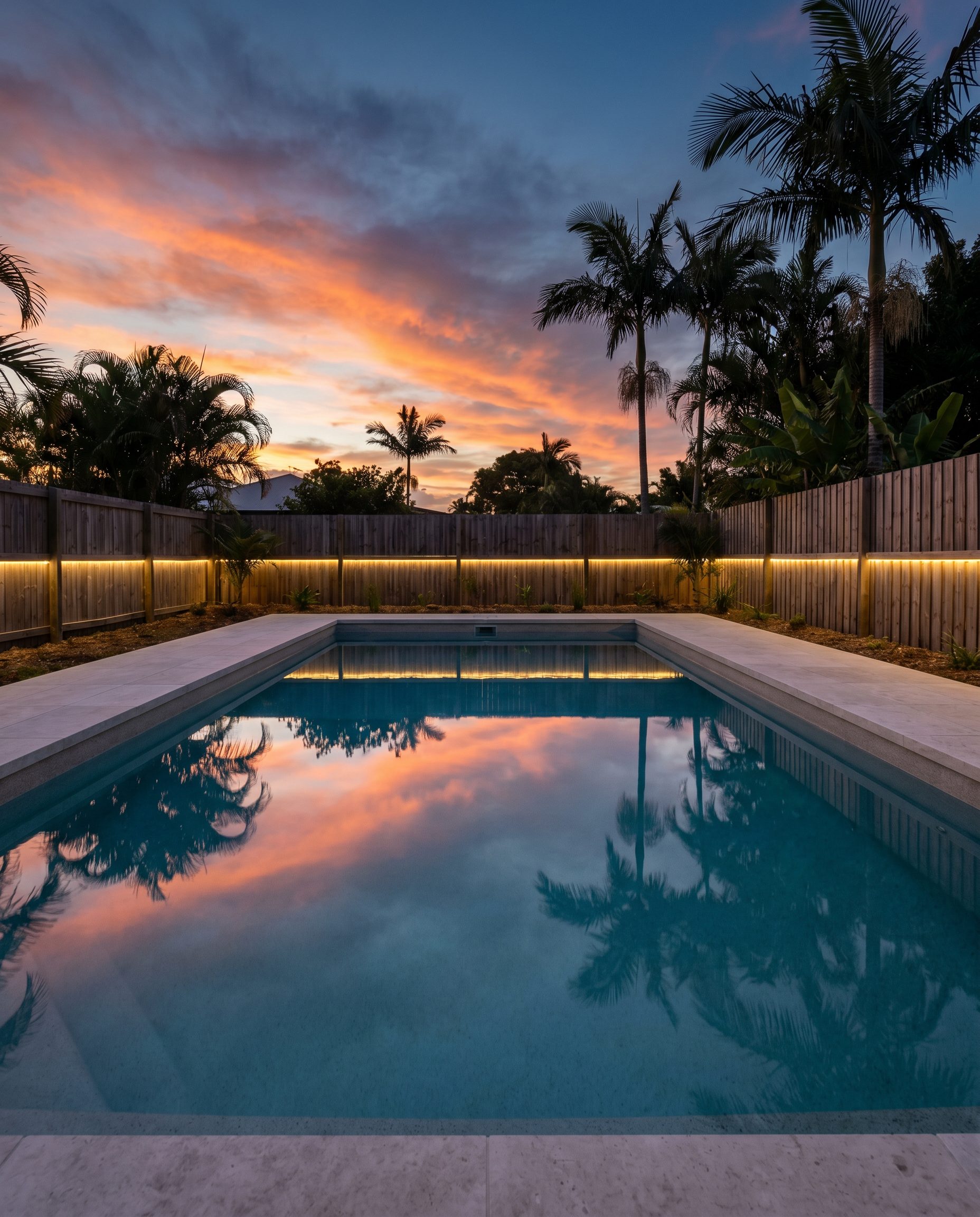
Still water does something no other element in residential architecture can do: it doubles the world. A pool at dusk holds the sky, the silhouette of the fence line, the warm interior of the house — all of it, silently, at your feet. This is why the pool cannot be treated as equipment, ordered from a catalogue and placed where the excavator can reach. It is the one element of the home that reflects all the others. It has to be composed.
Composition begins with proportion. The water's surface is a plane, and like any plane in architecture it has a relationship to every edge around it — the coping that frames it, the pavilion that leans over it, the planting that softens the line where the built environment gives way to the garden. When those proportions are held, the pool reads as inevitable: the space could not have been arranged any other way. When they are not, no amount of expensive finish will recover it.
Stillness is also an acoustic decision. A pump you can hear is a horizon you cannot reach. The mechanics of a Sanctum pool — circulation, heating, lighting — are designed to disappear, because the environment's purpose is the hour at the end of the day when the water settles and the home quietens around it.
We think of the result as a room without a ceiling. The Roman impluvium, the Moorish courtyard, the Japanese reflecting pond — every tradition that built around still water understood the same thing: the water is not the feature of the space. It is the reason for the space. Everything else is in its service.